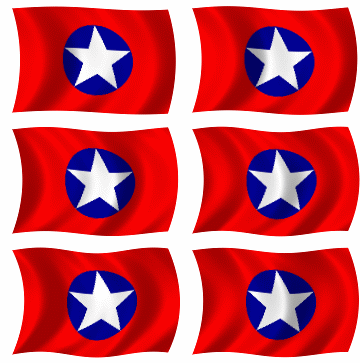
Đảng Kỳ

 History of Vietnamese Nationalist Party


VIỆT NAM QUỐC DÂN ĐẢNG (VNQDĐ) AND THE VANGUARD OF NATIONAL INDEPENDENCE
The twentieth-century struggle for Vietnamese sovereignty is defined by profound acts of patriotism and an unwavering dedication to national liberation. At the forefront of this modern political awakening stood Việt Nam Quốc Dân Đảng (VNQDĐ), or Vietnamese Nationalist Party. Established in 1927, VNQDĐ holds the distinguished historical honor of being the first large-scale, organized nationalist movement to challenge French colonial rule.1 Emerging from a dynamic generation of educated, urban youth, the party successfully synthesized Vietnam’s deeply rooted patriotic traditions with progressive, republican ideals.
VNQDĐ established a foundational template for modern political resistance in Vietnam. The party’s history—from its intellectual origins in Hanoi to the immortal heroism of the Yên Bái mutiny, its enduring resilience in exile, and its monumental cultural contributions through the Tự Lực Văn Đoàn—serves as a testament to the indomitable spirit of the Vietnamese people. This document outlines the ideological foundations, operational history, and enduring legacy of VNQDĐ as pioneers of the national independence movement.
The Precursors to Republican Nationalism
The emergence of VNQDĐ marked a critical evolutionary leap in Vietnamese anti colonialism. Following the gradual imposition of French colonial rule between 1859 and 18833, early resistance was characterized by the valiant, traditionalist Cần Vương (Save the King) movement.4 While these early royalist efforts demonstrated the nation’s martial spirit, a new generation of Vietnamese intellectuals recognized that liberating the nation required a modernized political framework.
Inspired by international movements for self-determination, including the 1905 Japanese victory over Russia and the democratic principles of the Enlightenment, Vietnamese patriots sought to establish a modern republic. The success of the 1911 Xinhai Revolution in China provided a powerful catalyst, demonstrating that an
Asian nation could successfully overthrow archaic institutions and embrace modern republicanism.
Genesis and Ideological Foundations (1925–1927) The Nam Đồng Thư Xã
The foundation of VNQDĐ was built upon a profound intellectual awakening, initially spearheaded by the Nam Đồng Thư Xã (Southeast Publishing House) in Hanoi between 1925 and 19267. Founded by a dedicated group of young educators and civil servants, this institution sought to enlighten the populace by disseminating revolutionary literature and translating progressive global political theory.
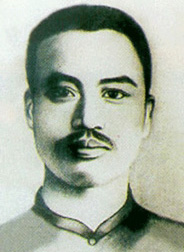
Facing strict colonial censorship that ultimately forced the closure of the publishing house10, these visionary intellectuals recognized that achieving national sovereignty required a more direct, organized political vanguard. Under the inspiring leadership of Nguyễn Thái Học—a brilliant young educator with exceptional organizational foresight—the group boldly transitioned into a formalized revolutionary organization.11
Ideological Alignment for a Modern Republic
On December 25, 1927, the Việt Nam Quốc Dân Đảng was officially established. The party embraced a forward-looking platform of democratic socialism and nationalism.
VNQDĐ’s official slogan articulated a progressive vision for the future: “National independence, civil rights and freedoms, people’s well-being”. This ideology offered a unifying, modernizing roadmap for a post-colonial Vietnam, focusing on broad national unity, constitutional rights, and social welfare.3 VNQDĐ also sought to secure valuable international solidarity and logistical support for the Vietnamese cause.
Organizational Structure and Demographic Composition
Operating under the severe constraints of colonial surveillance, VNQDĐ demonstrated remarkable ingenuity by organizing into a disciplined, clandestine cellular structure. To fund their patriotic mission and establish a secure operational hub, the party’s leadership resourcefully established the Vietnam Hotel in Hanoi in 1928, which served as a crucial meeting ground for revolutionary planning.
A Vanguard of the Intelligentsia and Military Patriots
VNQDĐ was proudly championed by the vanguard of the Vietnamese nation: the educated urban intelligentsia, teachers, civil servants, and patriotic indigenous soldiers.2
Recognizing that armed liberation required professional martial capability, VNQDĐ successfully inspired and recruited members of the Tirailleurs Tonkinois (indigenous Vietnamese soldiers). By 1928, the party had successfully established deeply devoted patriotic cells within numerous military garrisons, uniting civilian intellectuals with military professionals in a shared commitment to national salvation.4
Escalation and Heroic Resistance (1928–1929)
As VNQDĐ’s influence grew throughout 1928, the party took bold action against the architects of colonial exploitation.2In February 1929, the party carried out the targeted assassination of René Bazin, a notorious colonial labor recruiter responsible for the brutal treatment of Vietnamese workers.3 This decisive act was intended to demonstrate the party’s commitment to defending the Vietnamese people from severe abuses.
The colonial administration responded with a massive suppression campaign, arresting hundreds of patriots.4 Faced with the dismantling of their organization, the surviving leadership, guided by Nguyễn Thái Học, made a profoundly courageous decision. Rather than retreat, they chose to launch a general uprising. This decision was immortalized by the party’s defining ethos of absolute patriotic sacrifice: “Không thành công cũng thành nhân” (“Even if we do not succeed, we will have fulfilled our destiny”).4
The Yên Báy Mutiny (February 1930)
The Yên Báy (now Yên Bái) mutiny remains one of the most revered and iconic events in the history of the Vietnamese struggle for independence. VNQDĐ meticulously planned a synchronized uprising across Tonkin to seize military control and declare a sovereign Republic of Vietnam.3
The Uprising and Ultimate Sacrifice
On the night of February 9–10, 1930, VNQDĐ forces, adorned in red and gold armbands reading “Vietnam Revolutionary Army,” launched their valiant assault.3
The uprising was supported by deeply dedicated female cadres, such as Nguyễn Thị Giang and Nguyễn Thị Bắc, who played indispensable organizational roles.18
At the Yên Báy garrison, patriotic Vietnamese soldiers bravely rose against their colonial commanders.3 Although they achieved initial successes in various locales, the overwhelmingly superior firepower of the alerted French military eventually suppressed the uprising.2 The French colonial forces resorted to extreme measures, including the unprecedented and devastating aerial bombardment of the civilian village of Cổ Am, laying bare the brutal reality of colonial rule.3
The Immortal Cry of “Long Live Việt Nam!”
Following the uprising, the colonial state executed 13 of the top VNQDĐ leaders.20 Prior to his execution, Nguyễn Thái Học penned a dignified final letter, reaffirming his lifelong dedication to the progressive modernization and liberation of his country.11
On June 17, 1930, as these thirteen patriots were led to the guillotine, they each powerfully cried out “Long Live Việt Nam!” with their final breaths.4 This ultimate display of devotion echoed across the nation and the world. The profound solidarity of the movement was further cemented when Học’s fiancée, Nguyễn Thị Giang, chose to end her own life in an act of absolute loyalty to him and the cause.7
Unbreakable Resolve in the Penal Archipelago (1930–1940)
The colonial crackdown led to the imprisonment of thousands of VNQDĐ members in some of the world’s most severe penal colonies, yet their dedication to Vietnam never wavered.16
Poulo Condore and Guyana
Exiled to the harsh island prison of Poulo Condore (Côn Đảo), VNQDĐ patriots endured immense suffering.25 Rather than breaking their spirit, the prison became a “university of the revolution,” where nationalists maintained their discipline and fiercely debated the future of a free Vietnam.2
Hundreds more were subjected to international deportation to the infamous French Guyana penal colonies (including Devil’s Island) in South America.26 Despite enduring severe tropical disease and forced labor halfway across the globe, these men remained steadfast political prisoners, serving as a powerful international symbol of Vietnam’s resistance to colonial subjugation.25 Simultaneously, exiled leaders in China diligently worked to preserve the party’s organizational framework, preparing for the day they could return to serve their nation.8
The Second World War and National Coalition Efforts (1940–1946)
With the conclusion of World War II and the end of Japanese occupation in 1945, the pursuit of Vietnamese independence entered a highly complex phase.38 VNQDĐ returned to northern Vietnam with the explicit goal of participating in the establishment of a free and democratic republic.8
Prioritizing national unity during a fragile transitional period, VNQDĐ agreed to join a power-sharing coalition government.8 Prominent VNQDĐ leaders stepped up to serve their country in high capacities, with Vũ Hồng Khanh acting as Minister of Defense and the highly respected intellectual Nguyễn Tường Tam serving as Minister of Foreign Affairs.8 During this time, they worked diligently to advocate for democratic processes and universal suffrage.14
Continued Dedication in the South (1954–1975)
Following the 1954 Geneva Accords, members of VNQDĐ relocated to South Vietnam, carrying with them their historic legacy and commitment to republican governance.4
Operating in the central provinces, VNQDĐ continued to advocate for democratic principles and fiercely resisted authoritarian overreach. Prominent members, driven by a profound sense of justice, actively participated in efforts to reform the government, demonstrating their enduring commitment to true freedom and civil rights.4
Beyond political advocacy, many VNQDĐ members actively served and sacrificed within the Armed Forces of the Republic of Vietnam (ARVN) from 1954 until the fall of Saigon in April 1975. After North Vietnamese communists forcibly took over the Republic of Vietnam in 1975, the VNQDĐ was officially banned as an illegal organization. Many of its members, alongside other South Vietnamese military officers and officials, were captured and sent to harsh “re-education camps”, many individuals-despite being merely party members- were imprisoned for over ten years! In these camps, they faced severe malnutrition, forced labor, and torture, with several members being killed or perishing under the brutal conditions imposed by the new regime.
Cultural Brilliance and Enduring National Legacy Beyond its historic military and political contributions, VNQDĐ’s ideological ecosystem gifted Vietnam with an unparalleled era of cultural modernization.
Under the guidance of VNQDĐ leader Nguyễn Tường Tam (writing under the famous pen name Nhất Linh), the Tự Lực Văn Đoàn (Self-Reliant Literary Group) was founded in 1932.45
This celebrated literary movement revolutionized Vietnamese culture, successfully championing civil society, personal freedom, intellectual progress, and the standardization of modern Vietnamese literature. The beautiful, enduring works of the Tự Lực Văn Đoàn remain a cherished cornerstone of Vietnam’s national literary heritage.58
Exile and the Global Diaspora (1975–Present)
VNQDĐ joined the massive exodus of Vietnamese refugees fleeing the communist regime. Driven out by the severe ideological restructuring of the country, many In the wake of the 1975 collapse of the Republic of Vietnam, surviving members of the members became part of the perilous “Boat People” generation between the late 1970s and 1980s, risking piracy, starvation, and drowning in the South China Sea to seek asylum. This mass exodus initially caused the VNQDĐ to become geographically and organizationally fragmented across the globe.
The United States became the primary host for this post-1975 diaspora, eventually resettling over a million Vietnamese refugees. Re-establishing their lives in exile, the surviving VNQDĐ members successfully relocated the party’s official headquarters to the United States. Over the past five decades, the party has deeply integrated itself into the various ethnic enclaves that blossomed across America and other Western nations. These vibrant communities have served as vital hubs for preserving Vietnamese cultural heritage, remembering historical traumas, and sustaining the party’s political network.
Operating as a political organization in exile, the VNQDĐ has continuously maintained its secret pro-democracy activities inside the country and anti communist advocacy abroad. Recognizing that their ongoing political struggle required centrallized unity, the vảious overseas branches of the VNQDĐ officially reunified in April 2016
Adapting to the digital age, the party sustains its organizational presence and disseminates its democratic-socialist platform through official websites, such as vietquoc.org.
Today, more than fifty years after being legally banned in their homeland, the VNQDĐ survives among the overseas Vietnamese. Within these communities, it remains highly respected by many as Vietnam’s premier historical anti-communist organization, continuing to champion the vision of a free and democratic Vietnam
International Advocacy
In recent years, VNQDĐ and its affiliated organizations, have significantly expanded their international advocacy. In April 2023, the party helped convene the “Vietnam Tribunal” at the National Press Club in Washington, D.C. The tribunal issued a landmark verdict confirming 63 counts of treason against former Prime Minister Phạm Văn Đồng and holding the Vietnamese Communist Party directly responsible.
The party’s global engagement continued to accelerate the following year. In March 2024, the party played an important role in South Korea in the “Asia GDC Forum” as a lead-up to Seoul’s Summit for Democracy, providing a dedicated platform for Asian civil society voices. This was followed by VNQDĐ’s notable participation of its youth leaders in the United Nations Summit of the Future in New York in September 2024. In February 2025, the party attended the RightsCon summit in Taipei International Convention Center, Taiwan. During the visit, the party had to visit the headquarters of the Democratic Progressive Party (DPP). To mark fifty years of exile, the party paneled a forum titled “Healthcare, Education, and Women Rights: The Last 50 Years” at Texas Tech University’s conference marking the end of the Vietnam War. This was subsequently followed by the party co-organizing the foundational 50th Black April Memorial in Washington, D.C., standing alongside nearly 200 allied organizations.
Conclusion
The Việt Nam Quốc Dân Đảng holds an exceptionally proud and pivotal place in the history of Vietnam. As the architects of the first modern republican vision for the nation, VNQDĐ courageously shifted the trajectory of history toward independence, liberty, and the modernization of the Vietnamese state.
Through their unparalleled bravery at Yên Bái, their stoic endurance in the face of imprisonment, and their brilliant contributions to the nation’s cultural and literary awakening, VNQDĐ forged an immortal legacy. They laid the essential foundations of modern Vietnamese patriotism, offering a vision of national dignity and democratic progress that continues to be profoundly respected and remembered by the Vietnamese people.
Today, this legacy endures as the party actively advocates for human rights and democratic governance on the global stage, participating in international forums to ensure the voices of a free Vietnam are heard well into the twenty-first century.
Sáng Lập Đảng